
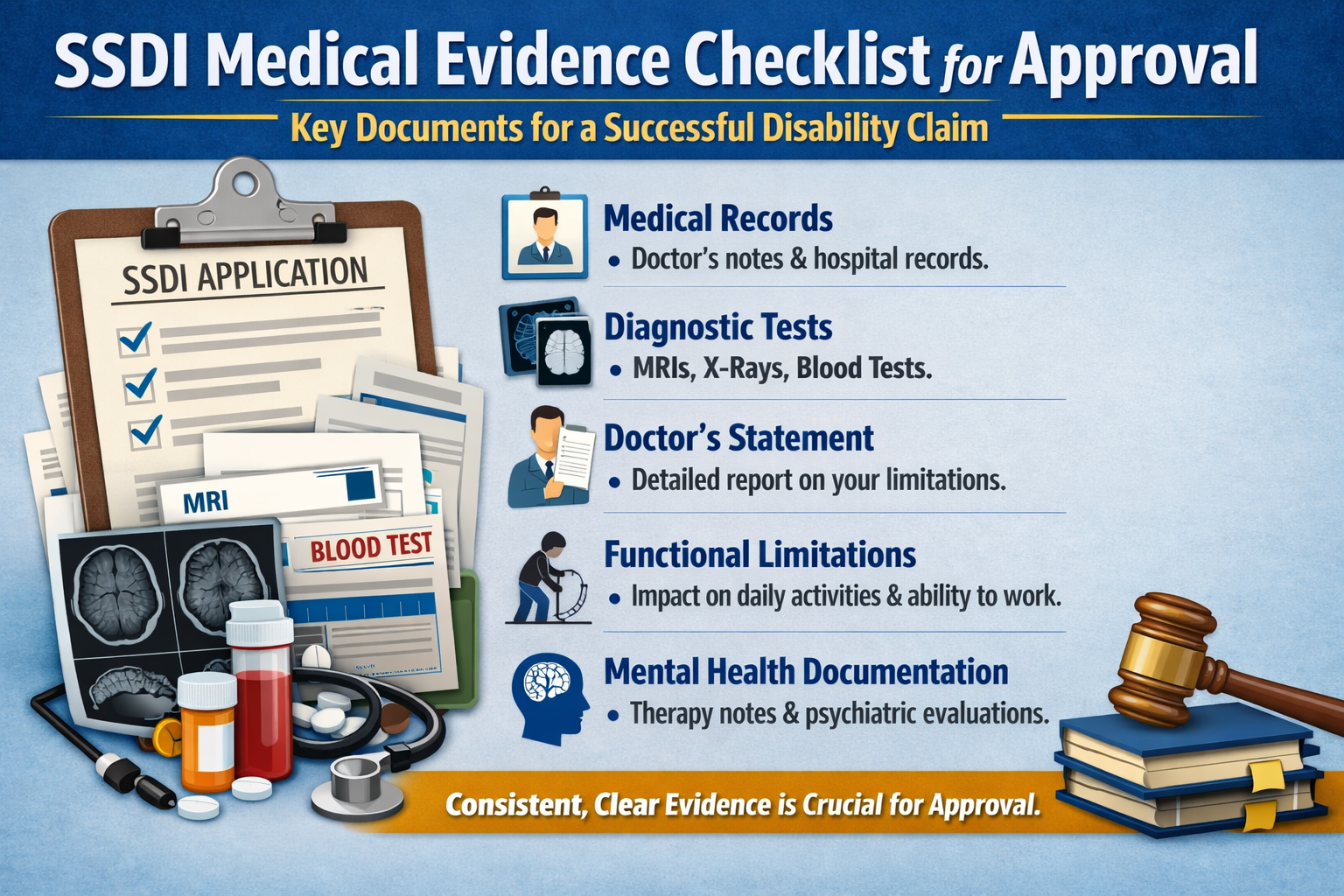
Applying for disability benefits can feel overwhelming, especially when you are already dealing with a serious health condition. A strong starting point is understanding the SSDI medical evidence checklist for approval, which explains how disability benefits work and what documentation matters most. When your paperwork clearly shows how your condition limits your ability to work, your chances of approval increase significantly.
Let’s break it down in simple terms so you know exactly what to gather and how to present it.
Why Medical Evidence Matters So Much
Social Security Disability Insurance, SSDI, is not based on how much pain you feel or how unfair your situation seems. It is based on medical proof. The Social Security Administration reviews records to decide whether your condition meets its strict definition of disability.
That means your SSDI medical evidence checklist for approval is not just a formality. It is the backbone of your claim.
If your records are incomplete, outdated, or vague, your application can be delayed or denied. Clear and consistent documentation tells a story, one that shows your condition is real, serious, and long lasting.
Core Documents You Must Include
Here’s what every SSDI medical evidence checklist for approval should contain.
1. Official Medical Records
This includes:
- Doctor visit notes
- Hospital records
- Clinic treatment summaries
- Specialist evaluations
These records should cover at least the last 12 months, and preferably longer if your condition has been ongoing. The more consistent the treatment history, the stronger your case appears.
2. Diagnostic Test Results
Objective evidence carries weight. Include copies of:
- MRI and CT scans
- X rays
- Blood tests
- Cardiac tests
- Neurological exams
These tests help confirm the diagnosis and show measurable impairment. A diagnosis without supporting test results may not be enough.
3. Physician Statements
A detailed statement from your treating physician can make a big difference. This should describe:
- Your diagnosis
- Symptoms you experience
- Treatment plan
- Expected duration of the condition
- Physical or mental limitations
A strong doctor’s statement connects your medical condition directly to your inability to maintain full time work. This connection is critical in any SSDI medical evidence checklist for approval.
Functional Limitations, The Missing Piece Many People Forget
Here’s the thing, SSDI is not only about what illness you have. It is about how that illness affects your daily functioning.
Your medical evidence should clearly explain limitations such as:
- Inability to stand or sit for long periods
- Difficulty lifting objects
- Memory or concentration problems
- Frequent need for rest
- Side effects from medication
If your records only mention a diagnosis but do not explain these limitations, the reviewer may assume you can still work.
Ask your doctor to describe your residual functional capacity, often called RFC. This evaluation outlines what you can and cannot do in a work setting. It is a key part of a solid SSDI medical evidence checklist for approval.
Mental Health Conditions Require Detailed Notes
For mental health claims, documentation must go beyond a simple diagnosis like depression or anxiety. You need:
- Therapy notes
- Psychiatric evaluations
- Medication history
- Reports of mood, behavior, and cognitive issues
Records should show how your condition affects focus, interaction with others, and ability to handle stress. Consistency in treatment is especially important here. Gaps in therapy or medication can raise questions unless properly explained.
Duration and Severity, Meeting the 12 Month Rule
SSDI requires that your condition:
- Has lasted or is expected to last at least 12 months
- Prevents substantial gainful activity
Your SSDI medical evidence checklist for approval must clearly show the long term nature of your impairment. Temporary injuries or short recovery periods usually do not qualify.
If your doctor believes your condition will not improve significantly, that opinion should be documented. Statements like “patient is unlikely to return to full time work” carry weight when supported by medical findings.
Consistency Across All Records
One overlooked issue is inconsistency. If one doctor notes severe limitations but another record suggests normal functioning, it can weaken your claim.
Review your records carefully before submission. Make sure:
- Dates match your treatment timeline
- Diagnoses are consistent
- Descriptions of symptoms align across visits
If something seems unclear, speak with your healthcare provider to clarify it in writing. A well organized SSDI medical evidence checklist for approval reduces confusion and strengthens credibility.
Additional Supporting Evidence
Beyond medical files, consider adding:
- Statements from family members describing daily struggles
- Work history reports showing declining performance
- Documentation of workplace accommodations
While medical evidence is primary, these supporting details help paint a fuller picture of your reality.
Common Mistakes That Lead to Denials
Many applications are denied due to preventable issues. Watch out for:
- Submitting incomplete medical records
- Failing to follow prescribed treatment without explanation
- Not providing updated records during the review process
- Relying only on a diagnosis without functional details
An effective SSDI medical evidence checklist for approval anticipates these problems and addresses them before submission.
Organizing Your File for Clarity
Presentation matters. When you prepare your documents:
- Arrange records in chronological order
- Label sections clearly
- Highlight key findings if allowed
- Keep copies of everything
Think of it as building a case file. The reviewer may never meet you, so your paperwork must speak clearly on your behalf.
When Appeals Become Necessary
If your initial application is denied, do not assume it is over. Many people are approved during reconsideration or at a hearing.
At that stage, strengthening your SSDI medical evidence checklist for approval becomes even more important. Updated records, more detailed doctor statements, and clearer functional assessments can turn a denial into an approval.
Sometimes, applicants realize that their first submission lacked depth. Appeals give you the opportunity to fill those gaps and present a more complete medical picture.
Living with a serious medical condition changes everything, from daily routines to long term plans. Gathering strong evidence may not be easy, but it gives you a clearer path forward. When your records tell the full story, your application stands on firmer ground, and each document becomes a step toward stability and support.









Leave a Reply