
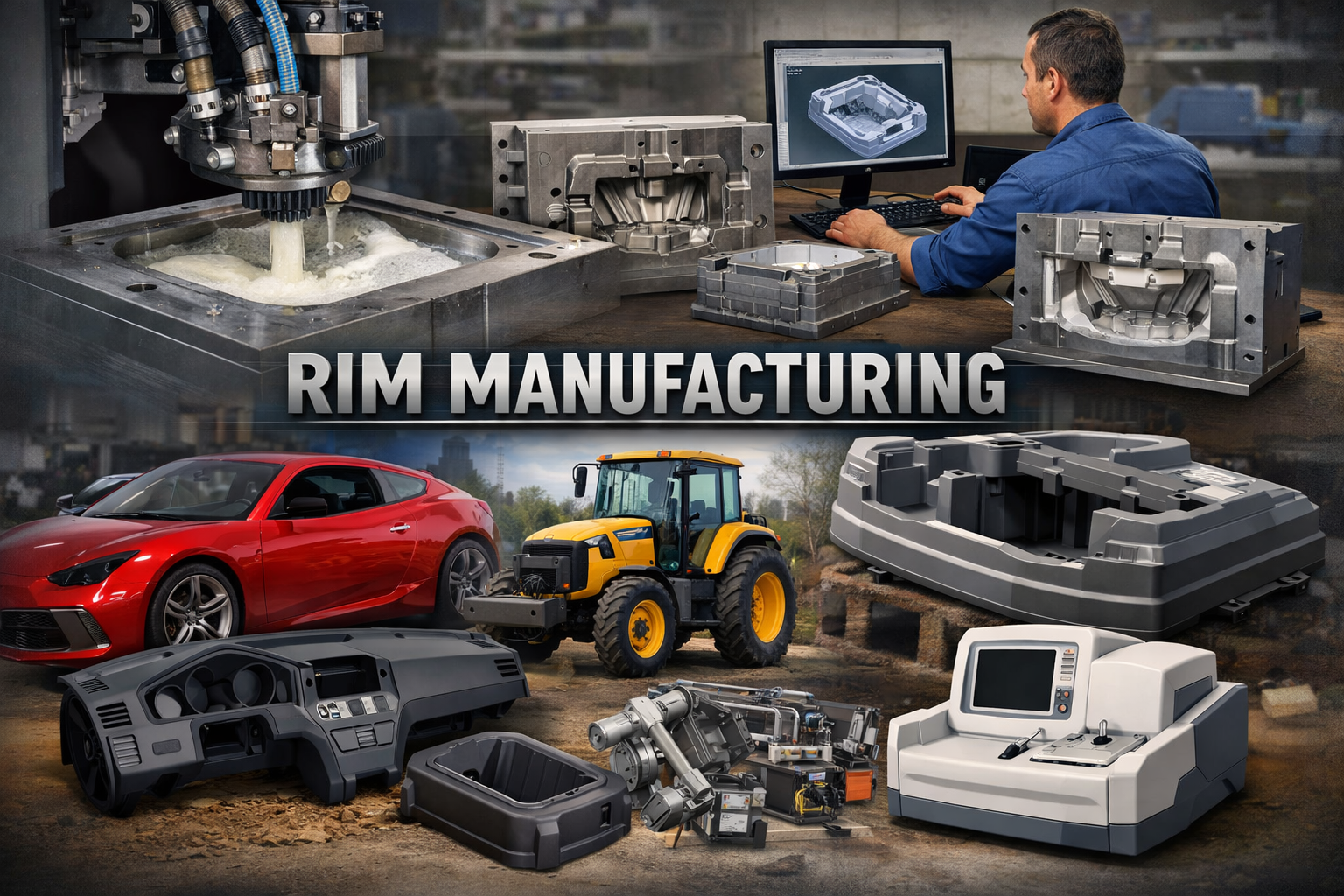
Manufacturers today are constantly looking for ways to produce durable parts that are lightweight and cost efficient. One method that continues to stand out is RIM manufacturing. This process allows companies to create strong polyurethane components with complex shapes while maintaining high performance standards. Many industries now rely on this technique when they need large or detailed parts that traditional molding methods cannot easily produce.
RIM manufacturing has gained attention because it blends engineering precision with flexible design capabilities. The process uses liquid polymers that react and expand inside a mold, forming a solid part that can handle demanding environments.
Understanding the Basics of RIM Manufacturing
RIM manufacturing, short for Reaction Injection Molding, involves mixing two liquid components that chemically react when combined. These materials are injected into a mold where they expand and cure to create a finished part.
The process works through several key steps:
Material preparation
Two liquid polymers are stored separately until the molding process begins. These components are carefully controlled to maintain the right chemical balance.
High pressure mixing
The liquids are mixed at high speed before entering the mold. This reaction starts the chemical transformation that forms polyurethane.
Injection into the mold
The mixed material flows into a mold cavity where it expands and fills every detail of the mold shape.
Curing and solidification
As the reaction continues, the material hardens into a durable and lightweight component.
Because the material flows easily before curing, RIM manufacturing can create large and complex shapes that other molding techniques struggle to produce.
Materials Used in RIM Manufacturing
Polyurethane is the most common material used in RIM manufacturing. This versatile polymer provides a balance of strength, flexibility, and resistance to wear.
Some of the typical material characteristics include:
- Strong structural performance
- Resistance to chemicals and moisture
- Lightweight composition
- Ability to maintain shape under stress
Engineers can also adjust the chemical formula to achieve specific performance properties. For example, certain formulations increase impact resistance while others improve thermal stability.
This ability to customize materials makes RIM manufacturing useful across many industries that require specialized performance.
Advantages of RIM Manufacturing
Manufacturers choose RIM manufacturing because it offers several practical advantages over traditional injection molding methods.
Design Flexibility
RIM manufacturing supports highly detailed designs. Since the material enters the mold as a liquid, it easily fills complex shapes and intricate patterns.
Designers can include:
- Reinforced ribs
- Integrated mounting points
- Smooth surface finishes
- Thick or thin wall sections
This flexibility allows engineers to combine multiple parts into one molded component.
Lightweight but Durable Parts
Even large components produced through RIM manufacturing remain relatively light. Polyurethane materials provide strength without adding excessive weight.
This makes the process valuable for products that must remain strong while staying easy to transport or install.
Lower Tooling Costs
Compared with traditional injection molding, RIM manufacturing uses molds that operate at lower pressure. Because of this, molds do not require the same heavy steel construction.
Lower mold pressure often means:
- Reduced tooling costs
- Faster mold production
- Easier design adjustments
For companies producing medium volume parts, this cost advantage can make a significant difference.
Smooth Surface Finish
Another benefit of RIM manufacturing is the natural surface quality it produces. The liquid material spreads evenly across the mold surface before curing.
This often results in parts that require minimal finishing or post processing.
Industries That Use RIM Manufacturing
Many industries rely on RIM manufacturing because of its ability to produce strong components with detailed shapes.
Some common applications include:
Automotive components
Vehicle manufacturers use RIM manufacturing to create body panels, enclosures, and structural components that need both durability and lightweight performance.
Medical equipment housings
Medical devices often require protective housings with precise shapes. RIM manufacturing helps produce these parts with consistent quality.
Industrial machinery panels
Factories frequently use polyurethane panels and covers that protect internal machinery components.
Agricultural equipment
Heavy equipment manufacturers benefit from strong molded components that can handle outdoor environments and demanding conditions.
These industries appreciate how RIM manufacturing allows engineers to create specialized shapes without sacrificing strength.
Mold Design and Engineering Support
Successful RIM manufacturing depends heavily on proper mold design. Engineers must carefully plan the mold cavity, flow channels, and material distribution.
Important factors include:
- Ensuring balanced material flow
- Preventing air pockets inside the mold
- Maintaining consistent curing conditions
- Achieving the desired surface texture
Engineering teams often use digital modeling and testing to refine mold designs before production begins. These preparations help ensure each molded part meets the required specifications.
Manufacturers that specialize in RIM manufacturing typically offer support during the design stage. Their engineers work with product designers to adjust shapes, wall thickness, and reinforcement structures.
This collaboration improves both product performance and production efficiency.
Production Efficiency and Scalability
Another reason many manufacturers prefer RIM manufacturing is its production efficiency. Once molds are prepared, the process can produce consistent parts with minimal variation.
Production benefits include:
- Repeatable manufacturing cycles
- Consistent material distribution
- Reduced waste during molding
- Reliable part strength across batches
The process is particularly useful for medium volume production where companies need dependable quality without extremely high tooling investments.
Why Engineers Choose RIM Manufacturing
Product designers often face a challenge when developing parts that must be strong, detailed, and economical to produce. RIM manufacturing addresses these needs by combining chemical engineering with practical production techniques.
Engineers appreciate the process because it allows them to:
- Create larger molded components
- Reduce the number of assembled parts
- Maintain high durability standards
- Adjust material properties based on performance needs
These advantages make RIM manufacturing a valuable option when designing modern products that require both structural integrity and creative design possibilities.
Inside manufacturing facilities, molds close, materials mix, and liquid polymers quietly transform into solid components that shape vehicles, machines, and equipment used every day. Each molded part reflects careful engineering decisions and the unique capabilities of RIM manufacturing.











Leave a Reply