
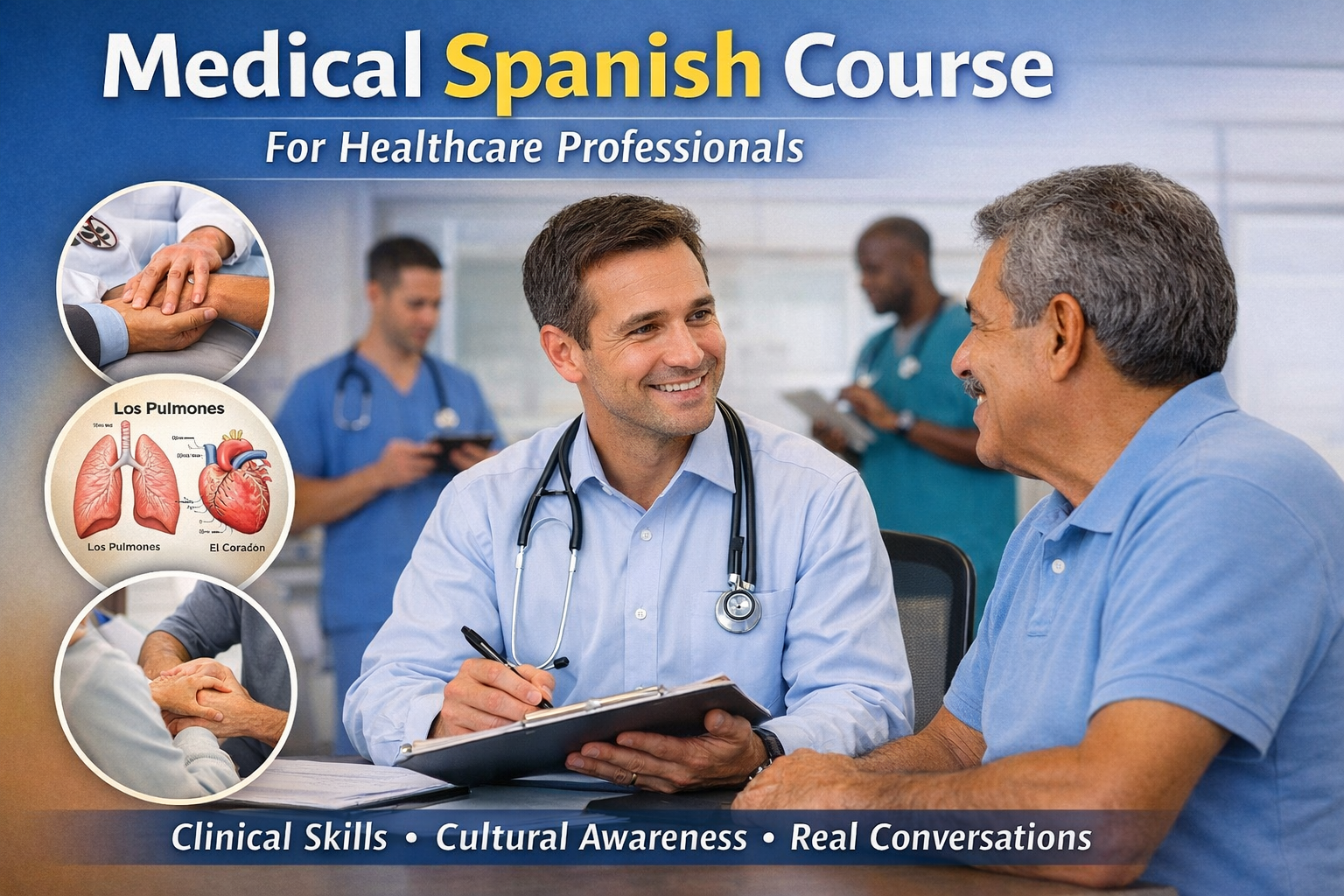
Clear communication sits at the center of good healthcare. When a patient cannot fully explain symptoms or understand instructions, small gaps turn into serious problems. That is why enrolling in a structured medical Spanish course has become a practical step for healthcare workers who serve Spanish speaking communities every day.
Spanish is the second most spoken language in many clinics, hospitals, and community health settings. Relying on hand gestures, basic phrases, or rushed translation apps often leads to confusion. A focused course built for medical environments changes that dynamic fast.
Why Medical Spanish Is Different From General Spanish
Here is the thing. Medical Spanish is not about ordering food or chatting about the weather. It is about understanding pain descriptions, explaining procedures, and asking the right follow up questions under pressure.
A proper medical Spanish course focuses on:
- Clinical vocabulary used in real patient encounters
- Common phrases for intake, exams, and discharge instructions
- Listening skills for different accents and speech speeds
- Cultural awareness that affects communication and trust
General language classes rarely touch these areas. Healthcare workers need language that works in exam rooms, emergency departments, and bedside conversations.
Who Benefits Most From a Medical Spanish Course
Medical Spanish is not limited to doctors. In reality, almost every role in healthcare benefits from stronger language skills.
Professionals who see the biggest impact include:
- Physicians and residents who conduct detailed patient interviews
- Nurses who explain medications, symptoms, and follow up care
- Medical assistants handling intake and patient histories
- EMTs and paramedics working in high stress situations
- Physical therapists and rehabilitation specialists
- Medical students preparing for real world clinical rotations
Even front desk staff and care coordinators find that better Spanish reduces tension and builds trust before a patient ever sees a provider.
Learning Through Real Clinical Scenarios
One of the strongest advantages of a focused medical Spanish course is how lessons are built around real situations. Instead of memorizing long word lists, learners practice language as it is actually used.
Courses designed for healthcare often include scenarios like:
- Taking a patient history and clarifying symptoms
- Asking about allergies, medications, and past conditions
- Explaining diagnostic tests and procedures
- Giving clear aftercare and medication instructions
- Handling sensitive topics with respect and clarity
This approach helps learners think in Spanish instead of translating word by word in their head. Confidence grows faster when language matches daily responsibilities.
Cultural Context Matters More Than You Think
Language alone is not enough. Cultural understanding plays a huge role in patient outcomes. Many Spanish speaking patients come from backgrounds where healthcare expectations differ.
A strong medical Spanish course includes cultural context such as:
- How patients describe pain or discomfort
- Family involvement in medical decisions
- Respectful ways to address older patients
- Beliefs around medication, treatment, and follow ups
These insights help providers avoid misunderstandings and create a more comfortable environment for patients who may already feel anxious or vulnerable.
Online Learning That Fits Healthcare Schedules
Healthcare schedules are unpredictable. Long shifts, rotating hours, and on call duties make traditional classroom learning difficult. Online medical Spanish courses solve that problem.
Well designed programs offer:
- Self paced lessons that fit around shifts
- Short modules that can be completed in small time blocks
- Audio practice for pronunciation and listening skills
- Free lessons to test your level before committing
Learning online also allows students to revisit difficult topics as often as needed, which is essential when mastering a new professional language.
Building Confidence, Not Just Vocabulary
Many healthcare workers understand basic Spanish but hesitate to speak it. Fear of making mistakes or saying the wrong thing holds them back. A medical Spanish course focuses on building confidence alongside accuracy.
Confidence grows when learners:
- Practice speaking complete medical phrases
- Learn how to clarify and confirm understanding
- Develop strategies for when they do not know a word
- Get comfortable with imperfect but effective communication
Patients respond positively when they feel heard and understood, even if the language is not perfect.
Supporting Better Patient Outcomes
Clear communication improves more than just patient satisfaction. It directly affects outcomes. Patients who understand their diagnosis and treatment plan are more likely to follow instructions and return for follow ups.
Healthcare facilities that support staff in learning medical Spanish often see:
- Fewer misunderstandings during visits
- Improved compliance with medications and care plans
- Stronger patient provider relationships
- Reduced reliance on ad hoc interpretation
Over time, these improvements shape a safer and more inclusive healthcare environment.
A Skill That Grows With You
Learning medical Spanish is not a one time task. It is a skill that grows with use. Each patient interaction reinforces vocabulary, listening skills, and cultural awareness.
Some days you may only use a few phrases. Other days you might hold a full conversation without realizing it until later. That moment usually comes quietly, during a routine exam or a calm conversation, when you notice the patient relax, nod, and respond with trust. That is when the language stops feeling like a lesson and starts feeling like part of the job.







Leave a Reply