
Facial expressions say a lot about how we feel, but over time some expressions start leaving permanent marks. One of the most common concerns people notice is the vertical lines that form between the eyebrows. This is where Frown line reduction comes in, a focused approach designed to soften these lines without freezing the face or changing how someone looks.
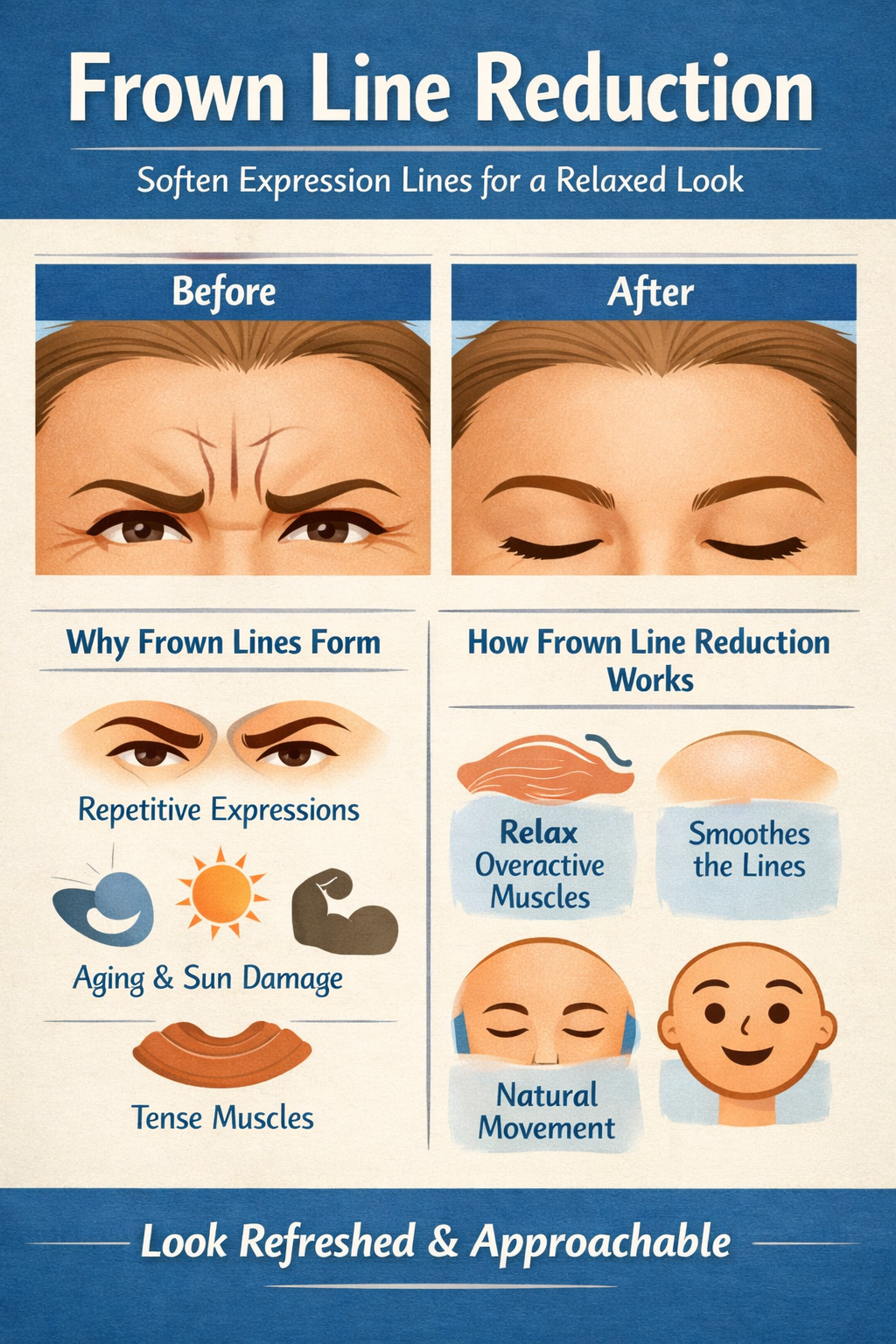
Frown lines are often called expression lines because they develop from repeated muscle movement. Every time you concentrate, squint, or frown, the muscles between your eyebrows contract. When skin is younger, it bounces back easily. As collagen levels decrease and skin elasticity changes, those lines begin to settle in and stay visible even when your face is at rest.
What exactly are frown lines
Frown lines usually appear as one or two vertical creases between the eyebrows. They are created by a group of muscles that pull the brows downward and inward. These muscles are active during everyday actions like reading, driving in bright light, or focusing on a screen.
What makes these lines tricky is that they can give off an unintended expression. Many people feel they look tired, stressed, or upset even when they are feeling calm. This mismatch between how you feel and how your face looks is often what leads people to explore treatment options.
Why frown lines deepen over time
Several factors contribute to deeper frown lines, not just aging alone. Repeated facial movement is the main cause, but skin quality also plays a role. As we age, the skin produces less collagen and loses moisture, making it less resilient. Sun exposure, dehydration, smoking, and even genetics can accelerate how quickly these lines become more pronounced.
Another factor is muscle strength. Stronger or more active brow muscles can etch lines more deeply into the skin. Over time, these lines stop being purely dynamic and become static, meaning they remain visible even when the face is relaxed.
How frown line reduction works
Frown line reduction treatments are designed to relax the specific muscles responsible for creating these lines. By targeting only the overactive muscles, the skin above them has a chance to smooth out. The goal is not to erase expression but to soften it.
Injectable treatments are commonly used because they work at the muscle level. Once the muscle activity is reduced, the constant folding of the skin slows down. This allows existing lines to appear less harsh and helps prevent them from deepening further.
What treatment planning looks like
A good treatment plan starts with understanding how your face moves. Everyone uses their facial muscles slightly differently, so placement and dosage matter. During a consultation, the practitioner assesses your natural expressions, muscle strength, and skin condition.
This personalized approach helps maintain natural movement. You can still raise your eyebrows or show emotion, but the muscles no longer pull as strongly into the same crease over and over. Thoughtful planning also helps avoid a heavy or stiff look.
Safety and precision matter
When it comes to injectable treatments, precision is everything. Frown line reduction focuses on a small area, but that area plays a big role in facial expression. Using the correct amount and placing it accurately ensures balanced results.
These treatments have a long history of use and are considered safe when performed by trained professionals. Side effects are usually mild and temporary, such as slight redness or swelling at the injection site. Proper technique and aftercare further reduce risks.
How results develop over time
Results from frown line reduction are not instant. Most people begin to notice changes within a few days, with full results developing over one to two weeks. As the targeted muscles relax, the skin gradually smooths and the lines appear softer.
The effects are temporary and typically last several months. Because muscle movement slowly returns, repeat treatments are needed to maintain results. Many people find that with consistent treatment, the lines become less severe over time since the skin is no longer being constantly folded.
Natural movement, not a frozen look
One of the biggest concerns people have is losing their natural expressions. Modern frown line reduction techniques aim to avoid that completely. The goal is balance, not restriction.
By relaxing only the muscles that cause harsh creases, the face can still move naturally. Most people notice that they look more relaxed and approachable, rather than different. Friends and colleagues may comment that they look well rested without knowing exactly why.
Who tends to benefit most
Frown line reduction is not limited to a specific age group. Some people seek treatment early as a preventative step, especially if they have strong brow muscles or notice lines forming in their twenties or thirties. Others explore it later to soften lines that have already become established.
Skin quality, lifestyle, and personal goals all influence outcomes. What matters most is choosing an approach that fits your face rather than following a one size fits all plan.
Frown lines may start as a simple result of expression, but with the right understanding and careful treatment, they do not have to define how your face looks at rest. For many, softening that area brings their appearance back in line with how they actually feel, calm, focused, and at ease.










Leave a Reply